



Dom Perignon 2004 (No Gift Box) – 75cl

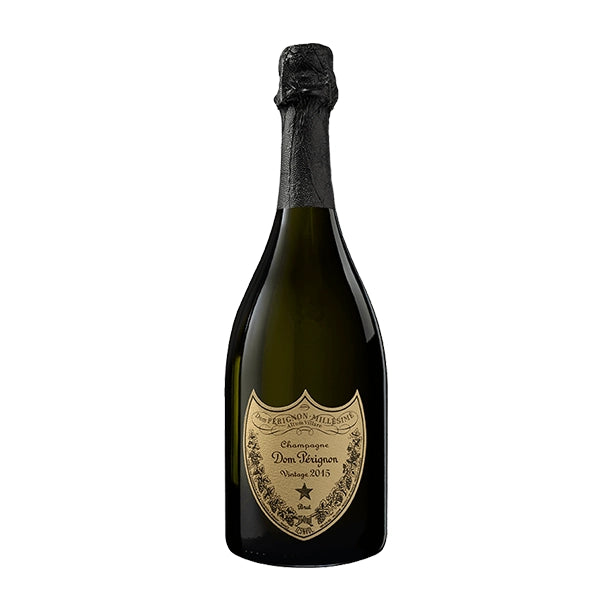
Dom Perignon 2015 (No Gift Box) – 75cl


Dom Pérignon Vintage 2015 Takashi Murakami Limited Edition - 75cl


Dom Perignon Vintage Edition Limite Lady Gaga 2010 – 75cl
Dom Pérignon Vintage Champagne
The most prestigious Champagne brand globally — founded 1668 by Benedictine monk Dom Pierre Pérignon at Abbey of Hautvillers. Modern Dom Pérignon brand launched 1936 by Moët & Chandon — the first prestige cuvée Champagne ever created, predating Cristal and all other prestige cuvées. Vintage-only Champagne — declared exclusively in years that meet the brand's exceptional quality threshold. Pinot Noir and Chardonnay blend from Grand Cru and Premier Cru villages. Aged 7-9 years on lees minimum. The distinctive Plénitude system: P1 (standard ~7-9 years), P2 (~12-15 years), P3 (~25-30+ years). LVMH-owned. Cellar Master Vincent Chaperon (since 2019). Vintage 2015 (standard release), Vintage 2015 Takashi Murakami, Rosé Vintage 2010 Takashi Murakami, and Vintage Edition Limitée Lady Gaga 2010. Buy Dom Pérignon Champagne online in Singapore with free delivery.
Buy Dom Pérignon Vintage Champagne in Singapore
Dom Pérignon is the most prestigious vintage Champagne brand globally — and the original prestige cuvée Champagne, launched in 1936 by Moët & Chandon as the world's first prestige Champagne expression. The brand is named after Dom Pierre Pérignon (1638-1715), a Benedictine monk and cellar master at the Abbey of Hautvillers who was instrumental in developing 17th-century Champagne production methods. The Liquid Collection stocks Dom Pérignon in Singapore — including the Dom Pérignon Vintage 2015 standard release (12.5% ABV, 75cl, complex aromatic profile combining intense roasted and cocoa notes balanced by delicate floral aromas of lime blossom, jasmine, peony, with bouquet of spices including aniseed and cardamom, fruity botanical freshness with subtle hints of orange and green papaya, soft full-bodied palate rich in peach, nectarine, citrus); the Dom Pérignon Vintage 2015 Takashi Murakami Limited Edition (the celebrated 2025 year-end Murakami collaboration with the Japanese contemporary artist's signature flower iconography); the Dom Pérignon Rosé Vintage 2010 Takashi Murakami Limited Edition (the prestige Rosé expression with the same Murakami artistic collaboration); and the Dom Pérignon Vintage Edition Limitée Lady Gaga 2010 (the legendary 2020 collaboration featuring tropical fruits like green mango, melon, pineapple, with peony, jasmine, lilac florals, full and massive Champagne with pepper, spice, vibrant style, deliciously saline finish). Owned by Moët Hennessy Louis Vuitton (LVMH).
Every bottle ships free across Singapore with no minimum order and standard 3-working-day delivery. Browse the Dom Pérignon selection above, or explore the wider wine category, the broader Champagne selection, the LVMH cognac portfolio at Hennessy, the LVMH single malt at Glenmorangie and Ardbeg, our luxury gifts selection, or the prestige Fine & Rare range.
Dom Pérignon — Key Facts at a Glance
- Brand
- Dom Pérignon
- Heritage Origin
- 1668 — Dom Pierre Pérignon as cellar master at Abbey of Hautvillers
- Modern Brand Launch
- 1936 (first commercial vintage was 1921, released 1936)
- Distinctive Position
- The world's first prestige cuvée Champagne; predates Cristal
- Region/Country
- Champagne region, France (Épernay/Hautvillers)
- Style
- Vintage-only Champagne (every bottle is vintage; no NV releases)
- Grape Varieties
- Pinot Noir + Chardonnay (typically ~50/50, varies by vintage)
- Vineyard Sourcing
- Exclusively Grand Cru and Premier Cru villages
- Lees Ageing
- Minimum 7-9 years (vs 15-month AOC minimum)
- Plénitude System
- P1 (~7-9 years), P2 (~12-15 years), P3 (~25-30+ years)
- Owner
- Moët & Chandon (Moët Hennessy Louis Vuitton, LVMH)
- Cellar Master
- Vincent Chaperon (since 2019, succeeded Richard Geoffroy 1990-2018)
1668 to 1936 — from Dom Pierre Pérignon to the first prestige cuvée Champagne
Dom Pérignon's heritage dates to 1668, when Dom Pierre Pérignon (1638-1715) was appointed cellar master at the Benedictine Abbey of Hautvillers in the Champagne region of France — beginning his decades-long contribution to the development of 17th and early-18th-century Champagne production methods. Pérignon joined the Hautvillers Benedictine community at age 30, and served as cellar master at the Abbey for 47 years until his death in 1715. While the famous quote "Come quickly, I am tasting the stars!" attributed to him is likely apocryphal, Dom Pérignon was genuinely instrumental in advancing wine-making techniques in the Champagne region across his decades-long tenure. His contributions included developing techniques to prevent unwanted secondary fermentation (a major problem for early Champagne winemakers), refining methods for blending different vineyard plots, advancing understanding of riddling and clarification processes, and establishing the Abbey of Hautvillers as one of the most respected wine-making operations in the Champagne region.
The modern Dom Pérignon brand as we know it today was launched in 1936 by Moët & Chandon — the first commercial Dom Pérignon release was the 1921 vintage, which was first released in 1936, making this the world's first prestige cuvée Champagne. The 1936 launch predates Cristal (which Roederer began producing for Tsar Alexander II of Russia in 1876, but only widely commercialised after 1945), Krug Grande Cuvée, and other prestige Champagnes — meaning Dom Pérignon literally invented the prestige cuvée Champagne category. Today the brand remains the most globally-recognised prestige vintage Champagne and continues under Moët & Chandon's stewardship within the LVMH group, with Cellar Master Vincent Chaperon (since 2019) leading the brand's modern wine-making decisions, succeeding the legendary Richard Geoffroy who served as Cellar Master for 28 years (1990-2018).
Why Dom Pérignon — vintage-only, Plénitude system, prestige cuvée heritage
Vintage-only Champagne and 7-9 year lees ageing
Dom Pérignon is exclusively vintage Champagne — meaning every bottle declares a specific harvest year, and Dom Pérignon is only declared in years that meet the brand's exceptional quality threshold. In years that do not meet the threshold, no Dom Pérignon is produced for that year (the grapes are blended into other Moët & Chandon NV releases instead). This is genuinely distinctive in the prestige Champagne category — most prestige Champagnes (including Krug) produce non-vintage releases alongside vintage releases, but Dom Pérignon has never produced a non-vintage Champagne across its 90+ year modern history. The Champagne is a blend of Pinot Noir and Chardonnay (typically approximately 50/50, varies by vintage), sourced exclusively from Grand Cru and Premier Cru villages within the Champagne AOC region. The wine is aged for a minimum of 7-9 years on lees — significantly longer than the 15-month minimum required for vintage Champagne by AOC regulations. The extended lees ageing develops Dom Pérignon's signature complexity, brioche, autolytic character, and texture — distinguishing the brand from competitors that release vintage Champagne at the regulatory minimum.
The Plénitude system — P1, P2, P3 release framework
The Dom Pérignon Plénitude system is the brand's distinctive three-stage release framework — recognising that vintage Champagne develops in distinct phases across extended ageing on lees. The three Plénitude stages are: Plénitude 1 (P1) — released approximately 7-9 years after harvest, the standard vintage Dom Pérignon at first release, capturing the wine's early elegance and refined youthful character; Plénitude 2 (P2) — released approximately 12-15 years after harvest, after extended lees ageing, capturing the wine's second peak of expression with deeper roasted and toasted character, brioche complexity, and increased intensity; Plénitude 3 (P3) — released approximately 25-30+ years after harvest, after extreme extended lees ageing, capturing the wine's third peak of expression with maximum complexity, profound autolytic character, and absolute prestige Champagne presence. The Plénitude releases are genuinely landmark Dom Pérignon expressions that few other vintage Champagne producers offer — most prestige Champagne brands release the wine once and only once. Recent P2 releases include the 2004 P2 (released ~2017), 2003 P2, and 2002 P2 (released ~2014). P3 releases are extraordinarily rare — recent examples include the 1990 P3, 1993 P3, and 1992 P3.
The Plénitude system — Dom Pérignon's three stages of vintage Champagne
The Plénitude system represents Dom Pérignon's distinctive approach to vintage Champagne — a three-stage release framework recognising that vintage Champagne develops in distinct phases across extended ageing on lees. Each Plénitude stage offers a different expression of the same vintage's character, allowing serious Champagne collectors to experience how the wine evolves across decades.
| Stage | Release Timeline | Lees Ageing | Distinctive Character |
|---|---|---|---|
| Plénitude 1 (P1) | ~7-9 years after harvest | Minimum 7-9 years on lees | Standard vintage Dom Pérignon at first release; early elegance, refined youthful character |
| Plénitude 2 (P2) | ~12-15 years after harvest | ~12-15 years on lees | Second peak of expression; deeper roasted/toasted character, brioche complexity, increased intensity |
| Plénitude 3 (P3) | ~25-30+ years after harvest | ~25-30+ years on lees | Third peak; maximum complexity, profound autolytic character, absolute prestige Champagne presence |
For Singapore drinkers building a complete Dom Pérignon vintage exploration, owning expressions from multiple Plénitude stages (P1, P2, and ideally P3) of the same vintage offers genuinely the most instructive demonstration of how prestige vintage Champagne evolves across extended ageing on lees — a journey that takes decades to fully experience. Recent P2 releases (2003 P2, 2004 P2) and rare P3 releases (1990 P3, 1992 P3, 1993 P3) are particularly sought-after by serious Champagne collectors.
The Dom Pérignon house style — vintage character, brioche complexity, prestige presence
Across the range, Dom Pérignon is defined by its prestige vintage Champagne house style — built on the brand's exclusive use of Grand Cru and Premier Cru Pinot Noir and Chardonnay, the extended 7-9 year minimum lees ageing programme, and the Cellar Master's vintage-specific blending decisions. The signature character combines complex roasted and cocoa notes balanced by delicate floral aromas of lime blossom, jasmine, peony, with brioche and autolytic character developing through extended lees ageing — distinguished from typical Champagne by remarkable depth and integration. The Dom Pérignon Vintage 2015 (12.5% ABV) shows complex aromatic flavour profile combining intense roasted and cocoa notes balanced by delicate floral aromas of lime blossom, jasmine, peony, elevated by a bouquet of spices including aniseed and cardamom; fruity botanical freshness with subtle hints of orange and green papaya; soft, full-bodied palate rich in peach, nectarine, citrus flavours. The Dom Pérignon Vintage 2010 Lady Gaga (75cl) shows radiant sweetness through tropical fruits (green mango, melon, pineapple), nuanced notes of orange zest and tangerine, scents of peony, jasmine, lilac, full and massive structure with pepper and spice giving vibrant style, deliciously saline finish. The Rosé Vintage 2010 (Murakami edition) brings additional red fruit character on top of the brand's signature complexity. For Champagne drinkers familiar with non-vintage Champagne (Moët & Chandon Imperial, Veuve Clicquot Yellow Label) or even other vintage Champagnes, Dom Pérignon's distinctive concentration, complexity, and Plénitude release framework are genuinely revelatory.
The Dom Pérignon range
Vintage Champagne vs Non-Vintage Champagne
Vintage Champagne and non-vintage (NV) Champagne represent two fundamentally different approaches to Champagne production — both legitimate categories within Champagne AOC regulations, but with meaningfully different production approaches, ageing requirements, and stylistic outcomes. Dom Pérignon is exclusively vintage Champagne, distinguishing the brand from typical NV Champagne offerings.
| Aspect | Vintage Champagne (Dom Pérignon) | Non-Vintage (NV) Champagne |
|---|---|---|
| Harvest Year | Single declared harvest year | Multiple harvest years blended |
| Declaration Approach | Only declared in exceptional years; some years skipped | Produced every year; blending maintains consistency |
| AOC Lees Ageing Minimum | 36 months | 15 months |
| Dom Pérignon Lees Ageing | 7-9 years minimum (exceeds AOC by 4-6 years) | (N/A — Dom Pérignon does not produce NV) |
| House Style | Distinct vintage character; harvest-year-specific expression | Consistent house style year-to-year |
| Pricing Position | Premium-to-prestige (Dom Pérignon: $300+ standard, $1000+ for limited editions) | Accessible-to-premium ($60-200 typical) |
| Best For | Serious occasions; vintage-character exploration; collector cellaring | Everyday celebrations; wedding receptions; broader use |
For Singapore drinkers building a complete Champagne cluster, owning Dom Pérignon vintage expressions alongside major NV Champagne offerings (Moët & Chandon Imperial, Veuve Clicquot Yellow Label, Bollinger Special Cuvée, Pol Roger NV) offers the most genuinely instructive same-category vintage-vs-NV comparison available — demonstrating how dramatically different harvest-year-specific declaration produces distinct stylistic outcomes vs the consistency-focused NV blending approach.
Limited edition collaborations — Dom Pérignon and contemporary art
Dom Pérignon has partnered with major contemporary artists and creators across multiple disciplines for limited-edition packaging — a distinctive marketing approach that has positioned Dom Pérignon as one of the most culturally-engaged premium Champagne brands. The collaborations combine the underlying Champagne quality with each artist's signature visual aesthetic, making the limited editions genuinely meaningful for both Champagne collectors and contemporary art collectors. Major Dom Pérignon limited-edition collaborations include: Andy Warhol (1996, posthumous tribute to the iconic American pop artist who frequently featured Dom Pérignon in his work); Jeff Koons (2013, the legendary American contemporary artist); Lady Gaga (2020-2021, Dom Pérignon Vintage 2010 Lady Gaga edition); Lenny Kravitz (2021, Dom Pérignon x Lenny Kravitz collaboration with custom photography); Takashi Murakami (2025, Dom Pérignon Vintage 2015 and Rosé Vintage 2010 Murakami collaboration — featuring the Japanese contemporary artist's distinctive flower iconography); Yang Yongliang (recent collaboration with the Chinese contemporary artist); Olafur Eliasson (Danish-Icelandic contemporary artist); Tracey Emin (British contemporary artist); Tokujin Yoshioka (Japanese designer); David Lynch (the legendary American filmmaker, Vintage 2003 Plénitude release).
The Liquid Collection currently stocks two of Dom Pérignon's most celebrated artist collaborations: the Takashi Murakami 2025 collaboration (across both the Vintage 2015 and the Rosé Vintage 2010), and the legendary Lady Gaga 2020 Vintage 2010 release. Both releases are genuinely distinctive collectors' bottles — the Murakami collaboration represents Dom Pérignon's most recent major contemporary art partnership, while the Lady Gaga collaboration has become one of the most sought-after modern Dom Pérignon limited editions globally for its combination of legendary 2010 vintage character and Gaga's distinctive packaging design.
Dom Pérignon and the LVMH Champagne portfolio
Dom Pérignon is owned by Moët & Chandon, which is itself part of Moët Hennessy Louis Vuitton (LVMH) — the world's largest luxury group, headquartered in Paris, France. LVMH is led by Bernard Arnault, who is among the wealthiest individuals in the world. The LVMH Champagne portfolio (operated through Moët Hennessy) is the most comprehensive premium-to-prestige Champagne portfolio in the world, including: Dom Pérignon (the flagship prestige cuvée brand); Moët & Chandon (the world's largest-selling Champagne brand); Veuve Clicquot (the famous yellow-label Champagne, founded 1772, including the prestige La Grande Dame); Krug (the prestige multi-vintage Champagne, founded 1843, including Grande Cuvée, Vintage, Rosé, Clos du Mesnil, Clos d'Ambonnay); Ruinart (the oldest Champagne house, founded 1729, including Blanc de Blancs, Rosé, Dom Ruinart); and Mercier (the more accessible LVMH Champagne).
The wider LVMH spirits portfolio extends well beyond Champagne to include Hennessy cognac (the world's largest cognac brand), Belvedere vodka, Glenmorangie and Ardbeg Scotch single malts, Volcán de mi Tierra tequila, Eminente rum, and various other premium spirits — making LVMH one of the most comprehensive global premium spirits operators alongside Diageo and Pernod Ricard. For Singapore drinkers, the LVMH ownership means Dom Pérignon offers world-class quality with consistent global distribution support. The LVMH cluster on TLC could expand significantly to include dedicated brand pages for Moët & Chandon, Veuve Clicquot, Krug, and Ruinart in future stock acquisitions — making The Liquid Collection one of the most genuinely comprehensive LVMH spirits and Champagne retailers in Singapore.
Dom Pérignon FAQ
What is Dom Pérignon?
Dom Pérignon is the most prestigious vintage Champagne brand globally — and the original prestige cuvée Champagne, launched in 1936 by Moët & Chandon as the world's first prestige Champagne expression. The brand is named after Dom Pierre Pérignon (1638-1715), a Benedictine monk and cellar master at the Abbey of Hautvillers. Dom Pérignon is exclusively vintage Champagne — declared only in years that meet the brand's exceptional quality threshold. The Champagne is a blend of Pinot Noir and Chardonnay sourced exclusively from Grand Cru and Premier Cru villages, aged for a minimum of 7-9 years on lees. Owned by LVMH. Cellar Master Vincent Chaperon since 2019.
What does Dom Pérignon taste like?
Dom Pérignon has a distinctive prestige vintage Champagne house style — combining complex roasted and cocoa notes balanced by delicate floral aromas of lime blossom, jasmine, peony, with brioche and autolytic character developing through extended lees ageing. The Dom Pérignon Vintage 2015 shows roasted and cocoa, floral lime blossom, jasmine, peony, with aniseed and cardamom spice; fruity botanical freshness with orange and green papaya; soft, full-bodied palate with peach, nectarine, citrus. The Lady Gaga 2010 shows radiant tropical fruits (green mango, melon, pineapple), peony, jasmine, lilac florals, full and massive structure with pepper and spice, deliciously saline finish.
When was Dom Pérignon founded?
Dom Pérignon's heritage dates to 1668, when Dom Pierre Pérignon (1638-1715) was appointed cellar master at the Benedictine Abbey of Hautvillers in the Champagne region of France. The modern Dom Pérignon brand as we know it today was launched in 1936 by Moët & Chandon — the first commercial Dom Pérignon release was the 1921 vintage, released in 1936, making this the world's first prestige cuvée Champagne. The 1936 launch predates Cristal (widely commercialised after 1945), Krug Grande Cuvée, and other prestige Champagnes — meaning Dom Pérignon literally invented the prestige cuvée Champagne category.
What is vintage Champagne?
Vintage Champagne is Champagne produced exclusively from grapes harvested in a single declared year — vs the much more common non-vintage (NV) Champagne, which is blended across grapes from multiple harvest years to maintain consistent house style. Vintage Champagne is only declared in years where the harvest meets the producer's quality threshold. By AOC regulations, vintage Champagne must be aged for a minimum of 36 months on lees, though Dom Pérignon ages its Vintage Champagne for 7-9 years minimum (more than double the regulatory minimum). The result is a more concentrated, complex, age-statement-marked Champagne that develops distinctive autolytic character.
What is the Dom Pérignon Plénitude system?
The Dom Pérignon Plénitude system is the brand's distinctive three-stage release framework. P1 (released ~7-9 years after harvest) is the standard vintage Dom Pérignon at first release. P2 (released ~12-15 years after harvest) is re-released after extended lees ageing with deeper roasted and toasted character, brioche complexity, and increased intensity. P3 (released ~25-30+ years after harvest) is the rarest expression with maximum complexity, profound autolytic character, and absolute prestige Champagne presence. The Plénitude releases are genuinely landmark Dom Pérignon expressions that few other vintage Champagne producers offer.
Where is Dom Pérignon made?
Dom Pérignon is produced in the Champagne region of France — specifically at Abbey of Hautvillers and the broader Moët & Chandon production facilities in Épernay, Champagne. The Champagne region is located in northeastern France, approximately 145km east of Paris. Dom Pérignon sources its Pinot Noir and Chardonnay grapes exclusively from Grand Cru and Premier Cru classified vineyards. Production follows the strict Méthode Champenoise — primary fermentation, secondary fermentation in bottle, extended lees ageing (Dom Pérignon ages 7-9 years minimum), riddling, disgorgement, and dosage.
Who is Dom Pierre Pérignon?
Dom Pierre Pérignon (1638-1715) was a French Benedictine monk and cellar master at the Abbey of Hautvillers in the Champagne region — one of the most influential figures in the early development of Champagne wine-making methods. Pérignon joined the Hautvillers Benedictine community at age 30 (1668), and served as cellar master for 47 years until his death in 1715. While the famous quote "Come quickly, I am tasting the stars!" attributed to him is likely apocryphal, Dom Pérignon was genuinely instrumental in advancing wine-making techniques in the Champagne region across his decades-long tenure.
Who owns Dom Pérignon?
Dom Pérignon is owned by Moët & Chandon, which is itself part of Moët Hennessy Louis Vuitton (LVMH) — the world's largest luxury group. The LVMH Champagne portfolio includes Dom Pérignon, Moët & Chandon, Veuve Clicquot, Krug, Ruinart, and Mercier. The wider LVMH spirits portfolio includes Hennessy cognac, Belvedere vodka, Glenmorangie and Ardbeg Scotch single malts, and various other premium spirits.
What are Dom Pérignon limited edition collaborations?
Dom Pérignon has partnered with major contemporary artists and creators for limited-edition packaging — including Andy Warhol (1996), Jeff Koons (2013), Lady Gaga (2020-2021), Lenny Kravitz (2021), Takashi Murakami (2025), Yang Yongliang, Olafur Eliasson, Tracey Emin, Tokujin Yoshioka, and David Lynch. Each Dom Pérignon limited edition is a distinct collector's bottle that combines the underlying Champagne quality with the artist's signature visual aesthetic. The Liquid Collection currently stocks the Takashi Murakami 2025 collaboration (Vintage 2015 and Rosé Vintage 2010) and the Lady Gaga 2020 Vintage 2010 release.
Is Dom Pérignon a good gift?
Yes — Dom Pérignon is the most prestigious Champagne gift choice globally, and the universal flagship gift Champagne for celebrations, milestones, and major occasions. The Dom Pérignon Vintage 2015 is the universal flagship gift bottle. The Dom Pérignon Vintage 2015 Takashi Murakami Limited Edition is the considered contemporary collector gift. The Rosé Vintage 2010 Murakami is the prestige Rosé collector gift. The Vintage Edition Limitée Lady Gaga 2010 is one of the most collectible modern Dom Pérignon releases. The 1668 Dom Pierre Pérignon heritage, the 1936 modern brand launch (first prestige cuvée Champagne ever), the vintage-only release approach, the 7-9 year minimum lees ageing, the Plénitude system, the LVMH ownership pedigree, and the major contemporary artist collaborations all give Dom Pérignon unusually rich gift storytelling.
Do you deliver Dom Pérignon across Singapore?
Yes. Free delivery anywhere in Singapore with no minimum order. Standard lead time is 3 working days.