



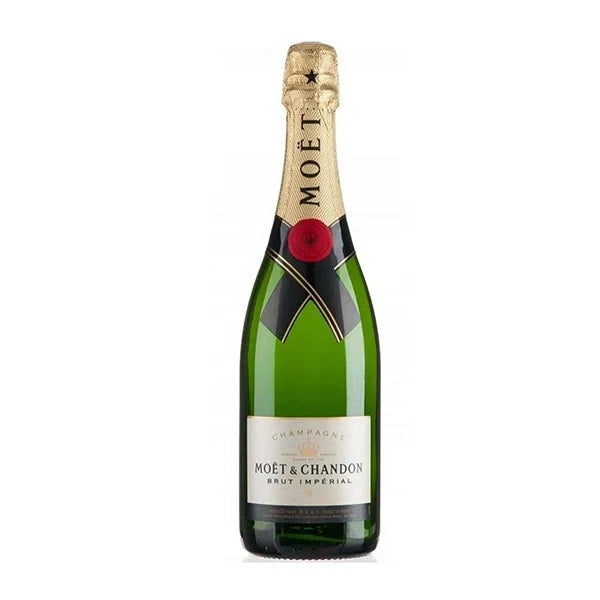
Moet & Chandon Imperial Brut – 75cl


Moet & Chandon Champagne Brut Mini [Party Pack of 6] – 200ml


Moet & Chandon Rose Imperial – 75cl
Moët & Chandon Champagne
The world's largest-selling Champagne brand. Founded 1743 in Épernay, Champagne by Claude Moët — over 280 years of continuous heritage. Jean-Rémy Moët (1758-1841) was a personal friend of Napoleon Bonaparte, who famously gave Jean-Rémy his own Légion d'Honneur from his own jacket in 1814. Renamed Moët & Chandon in 1833 after Pierre-Gabriel Chandon de Briailles joined. Parent house of Dom Pérignon (launched 1936 — the world's first prestige cuvée Champagne). Owns the historic Hautvillers Abbey (acquired 1822) — the spiritual home of Champagne where Dom Pierre Pérignon served as cellar master 1668-1715. LVMH-owned since 1971. Cellar Master Benoît Gouez since 2005. The signature Imperial Brut NV (the iconic flagship — created from 100+ different wines with 20-30% reserve wines), the Rose Imperial NV, the Mini Party Pack (6x 200ml), and prestige Grand Vintage releases. Buy Moët & Chandon Champagne online in Singapore with free delivery.
Buy Moët & Chandon Champagne in Singapore
Moët & Chandon is the world's largest-selling Champagne brand — and one of the most historically significant Champagne houses globally, founded in 1743 in Épernay, Champagne, by Claude Moët, with over 280 years of continuous heritage. The brand ships approximately 30+ million bottles annually globally, the largest volume of any Champagne brand. Moët is the parent house of Dom Pérignon (launched in 1936 as the world's first prestige cuvée Champagne — Dom Pérignon remains a sub-brand of Moët & Chandon to this day). The Liquid Collection stocks the comprehensive Moët & Chandon range available in Singapore — including the iconic Moët & Chandon Imperial Brut NV (75cl, the world's largest-selling premium Champagne, the Moët & Chandon Style distinguishes itself by its bright fruitiness, seductive palate and elegant maturity, created from more than 100 different wines, of which 20-30% are reserve wines specially selected to enhance maturity, complexity and consistency, the assemblage reflects the diversity and complementarity of the three grape varietals — Pinot Noir, Pinot Meunier, Chardonnay), the Moët & Chandon Rose Imperial NV (75cl, a spontaneous, radiant, romantic expression of the Moët & Chandon style, distinguished by bright fruitiness, seductive palate and elegant maturity), and the distinctive Moët & Chandon Mini Party Pack (6 x 200ml mini-bottles — ideal for celebrations, events, and gift presentations). LVMH-owned since 1971. Cellar Master Benoît Gouez has led the brand since 2005 — a 20+ year tenure as one of the longest-serving modern Champagne Cellar Masters.
Every bottle ships free across Singapore with no minimum order and standard 3-working-day delivery. Browse the Moët & Chandon selection above, or explore the wider wine category, the broader Champagne selection, the prestige LVMH Champagne at Dom Pérignon (the Moët & Chandon-launched prestige cuvée), the iconic Veuve Clicquot, the LVMH cognac portfolio at Hennessy, the LVMH single malt at Glenmorangie and Ardbeg, our luxury gifts selection, or the prestige Fine & Rare range.
Moët & Chandon — Key Facts at a Glance
- Brand
- Moët & Chandon
- Founded
- 1743 by Claude Moët (1683-1760), in Épernay, Champagne, France
- Distinctive Position
- The world's largest-selling Champagne brand (~30+ million bottles annually)
- Region/Country
- Épernay, Avenue de Champagne, France
- Major Heritage Figure
- Jean-Rémy Moët (1758-1841) — Napoleon Bonaparte's personal friend
- Renamed 1833
- Pierre-Gabriel Chandon de Briailles joined; brand renamed Moët & Chandon
- Hautvillers Abbey
- Acquired 1822; the spiritual home of Champagne
- Dom Pérignon Launch
- 1936 (world's first prestige cuvée Champagne)
- Imperial Brut Blend
- 100+ different wines; 20-30% reserve wines; Pinot Noir + Pinot Meunier + Chardonnay balanced
- Vineyard Ownership
- 1,200+ hectares — the largest single vineyard ownership in Champagne
- Owner
- LVMH (Moët Hennessy Louis Vuitton) since 1971 (Moët-Hennessy merger)
- Cellar Master
- Benoît Gouez (since 2005 — 20+ year tenure)
1743 to Napoleon — Moët & Chandon's 280+ year heritage
Moët & Chandon was founded in 1743 by Claude Moët (1683-1760) in Épernay, the historic centre of the Champagne region of France. The 1743 founding date places Moët & Chandon as one of the oldest Champagne houses globally — older than Veuve Clicquot (1772), Perrier-Jouët (1811), Bollinger (1829), Pol Roger (1849), and most other major Champagne houses. Claude Moët established the brand's relationships with French royalty and the Versailles court, supplying Champagne to Madame de Pompadour and across the Bourbon court at Louis XV.
Claude's grandson Jean-Rémy Moët (1758-1841) transformed the brand into a global Champagne powerhouse during the Napoleonic era. Jean-Rémy joined the Moët business in 1782 and took over leadership in 1792 — leading the brand through the French Revolution, the Napoleonic era, and the Bourbon Restoration. His most genuinely landmark relationship was with Napoleon Bonaparte — the two became personal friends, and Napoleon visited the Moët cellars in Épernay multiple times across his rule (1804-1815). The friendship culminated famously in 1814: as the French Empire collapsed and Napoleon abdicated, the Emperor visited Jean-Rémy at Moët one final time and gave Jean-Rémy his own Légion d'Honneur (Legion of Honour) from his own jacket — a genuinely historic gesture that has been celebrated as one of the most important moments in modern Champagne heritage.
Jean-Rémy acquired the historic Hautvillers Abbey in 1822 — the Benedictine abbey where Dom Pierre Pérignon served as cellar master from 1668 to 1715. This acquisition was visionary, securing for Moët the spiritual home of Champagne and the foundation for what would later become the Dom Pérignon prestige cuvée brand. In 1833, Jean-Rémy's son-in-law Pierre-Gabriel Chandon de Briailles joined the company, leading to the renaming to Moët & Chandon — the name that has defined the brand ever since. Moët & Chandon launched Dom Pérignon in 1936 as the world's first prestige cuvée Champagne. The brand has been part of LVMH (Moët Hennessy Louis Vuitton) since 1971.
Why Moët & Chandon — Imperial heritage, balanced blending, Hautvillers
Imperial Champagne and Napoleonic heritage
The "Imperial" in Moët & Chandon Imperial Brut NV directly references Napoleon's Empire and the brand's deep historical association with the Emperor. Jean-Rémy Moët's friendship with Napoleon Bonaparte, the multiple Imperial cellar visits, and the legendary 1814 Légion d'Honneur from Napoleon's own jacket established the Imperial naming convention that has defined the Moët flagship NV expression for nearly two centuries. The Moët Imperial NV is genuinely the most universally-recognised Champagne expression in the world — shipping millions of bottles globally annually as the world's largest-selling premium Champagne by volume. The Imperial Brut blend is created from more than 100 different wines, of which 20-30% are reserve wines specially selected to enhance the wine's maturity, complexity, and consistency year after year. The blend reflects all three Champagne grape varieties — Pinot Noir, Pinot Meunier, and Chardonnay — combined in a balanced approach without any single variety dominating, distinguishing Moët from the Pinot Noir-led Veuve Clicquot or Chardonnay-led Perrier-Jouët. The Moët & Chandon Style distinguishes itself by its bright fruitiness, seductive palate, and elegant maturity.
Hautvillers Abbey and the Dom Pérignon connection
Hautvillers Abbey is the historic Benedictine abbey in the Champagne region where Dom Pierre Pérignon (1638-1715) served as cellar master from 1668 to 1715 — making the abbey the spiritual home of Champagne and one of the most historically significant sites in Champagne wine heritage. Located in the village of Hautvillers, near Épernay, the abbey was founded in the 7th century. Moët & Chandon acquired Hautvillers Abbey in 1822 under Jean-Rémy Moët's leadership, recognising the abbey's importance to Champagne heritage. Today, Hautvillers Abbey is part of Moët's heritage operations and serves as a symbolic centre for the brand's connection to early Champagne history. The 1936 launch of Dom Pérignon by Moët & Chandon was a strategic decision to create a prestige cuvée at the absolute apex of the Champagne category — predating Cristal, Krug Grande Cuvée, and other prestige Champagnes — naming it directly in honour of Dom Pierre Pérignon's contributions to Champagne wine-making at Hautvillers Abbey. Today, Moët provides the volume and accessible-premium presence (Imperial Brut at scale), while Dom Pérignon provides the prestige cuvée vintage Champagne expression at the absolute apex — a genuinely successful prestige cuvée structure that has defined modern luxury Champagne.
Moët & Chandon heritage timeline — 280+ years of landmark Champagne moments
Moët & Chandon's heritage spans over 280 years of continuous Champagne production — encompassing multiple landmark moments that have defined the brand's role as the world's largest-selling Champagne. The brand's heritage timeline reflects French history, royal patronage, the Napoleonic era, and modern luxury Champagne development.
| Year | Landmark Moment | Significance |
|---|---|---|
| 1743 | Maison Moët founded by Claude Moët in Épernay | One of the oldest Champagne houses globally; predates Veuve Clicquot, Perrier-Jouët |
| 1750s | Madame de Pompadour and the Versailles court patronage | Royal patronage establishing premium positioning |
| 1782 | Jean-Rémy Moët joins the family business | Begins the Napoleonic-era transformation of the brand |
| 1814 | Napoleon gives Jean-Rémy his own Légion d'Honneur from his jacket | Genuinely historic Imperial gesture; foundation of Imperial branding |
| 1822 | Moët acquires the historic Hautvillers Abbey | Securing the spiritual home of Champagne (Dom Pérignon's monastery) |
| 1832-33 | Pierre-Gabriel Chandon de Briailles joins; brand renamed Moët & Chandon | Modern brand name established |
| 1841 | Jean-Rémy Moët dies at age 83; 60-year tenure ends | End of the Napoleonic-era leadership |
| 1936 | Dom Pérignon launched (1921 first vintage) | The world's first prestige cuvée Champagne; Moët launches the prestige category |
| 1971 | Moët-Hennessy merger forms | Joins with Hennessy cognac in foundational LVMH precursor |
| 1987 | Moët Hennessy + Louis Vuitton merge to form LVMH | World's largest luxury group formed |
| 2005 | Benoît Gouez appointed Cellar Master | Modern leadership; 20+ year tenure as of 2025 |
| 2010 | Ice Impérial launched | First Champagne specifically designed to be served over ice |
The 280+ year heritage timeline demonstrates Moët & Chandon's sustained relevance across French history — from 18th-century Bourbon court origins through Napoleonic-era global expansion, to modern LVMH integration and contemporary Champagne innovation. Few Champagne brands carry such genuinely landmark heritage credentials, and the brand's Napoleonic associations and Hautvillers Abbey stewardship are particularly distinctive.
The Moët & Chandon house style — bright fruitiness, seductive palate, elegant maturity
Across the range, Moët & Chandon is defined by its distinctive Champagne house style — distinguished by its bright fruitiness, seductive palate, and elegant maturity. The Imperial Brut blend is created from more than 100 different wines, of which 20-30% are reserve wines specially selected to enhance the wine's maturity, complexity, and consistency year after year. The blend reflects all three Champagne grape varieties — Pinot Noir, Pinot Meunier, and Chardonnay — combined in a balanced approach without any single variety dominating. This balanced three-grape approach distinguishes Moët from the Pinot Noir-led Veuve Clicquot Yellow Label or the Chardonnay-led Perrier-Jouët Grand Brut. The Moët & Chandon Imperial Brut NV shows the brand's signature bright, fruity character with balanced palate and elegant maturity, ideal for celebrations and major occasions. The Moët & Chandon Rose Imperial NV is a spontaneous, radiant, romantic expression of the Moët & Chandon style — the same bright fruitiness, seductive palate and elegant maturity, in Rose Champagne form. For Champagne drinkers familiar with Veuve Clicquot's Pinot Noir-dominated richness or Perrier-Jouët's Chardonnay-dominated elegance, Moët's balanced three-grape approach offers a genuinely distinctive middle path that has made Moët the world's most universally accessible premium Champagne. Compared to the prestige cuvées: Dom Pérignon (Moët's prestige cuvée sister brand) wears the vintage-only release approach and Plénitude system; Moët Imperial wears the consistent NV style year after year, supported by the brand's priceless reserve wines collection.
The Moët & Chandon range
The four-house LVMH and Pernod Ricard Champagne comparison at TLC
Moët & Chandon, Veuve Clicquot, Perrier-Jouët, and Dom Pérignon represent four genuinely distinct prestigious Champagne house philosophies — each with its own house style, ownership group, prestige cuvée, and historical heritage. Together, the four brands offer Singapore drinkers comprehensive coverage of the prestigious Champagne segment at The Liquid Collection.
| Aspect | Moët & Chandon | Veuve Clicquot | Perrier-Jouët | Dom Pérignon |
|---|---|---|---|---|
| Founded | 1743 | 1772 (Madame Clicquot 1805) | 1811 | 1668 / 1936 modern launch |
| Founder | Claude Moët | Philippe Clicquot-Muiron | Pierre Perrier & Adèle Jouët | Dom Pierre Pérignon (heritage); Moët & Chandon (modern launch) |
| Owner | LVMH (since 1971) | LVMH (since 1987) | Pernod Ricard (since 2005) | LVMH (Moët & Chandon) |
| House Style | Balanced three-grape — bright fruitiness, seductive palate, elegant maturity | Pinot Noir-dominated — strength & silkiness | Chardonnay-dominated — floral, elegant, refined | Vintage-only — complex, brioche, autolytic |
| NV Flagship | Imperial Brut | Yellow Label Brut NV | Grand Brut | (No NV — vintage only) |
| Prestige Cuvée | (Sister brand: Dom Pérignon) | La Grande Dame (1972) | Belle Époque (1969) | Dom Pérignon Vintage (1936 — first prestige cuvée ever) |
| Iconic Visual | Imperial gold cursive label | Yellow label (1877) | White anemones bottle (Émile Gallé 1902) | Distinctive shield-shaped label |
| Cellar Master | Benoît Gouez (since 2005) | Didier Mariotti (since 2020) | Séverine Frerson (since 2020 — first woman in role) | Vincent Chaperon (since 2019) |
| Distinctive Position | The world's largest-selling Champagne; parent of Dom Pérignon | Most landmark female-leadership heritage (Madame Clicquot) | Most artistically distinctive (Art Nouveau) | The first prestige cuvée Champagne ever |
For Singapore drinkers building a complete prestige Champagne cluster, owning expressions from all four brands offers the genuinely most instructive same-category four-house Champagne comparison available — demonstrating how dramatically different production philosophies, ownership pedigrees, and aesthetic heritages produce distinct prestige Champagne styles. The four brands together represent the full breadth of prestigious Champagne options at The Liquid Collection — and TLC's four-page Champagne cluster is now genuinely one of the most comprehensive Champagne retailer offerings in Singapore.
Moët & Chandon and the LVMH Champagne portfolio — the parent house of Dom Pérignon
Moët & Chandon has been owned by Moët Hennessy Louis Vuitton (LVMH) since 1971 — though the formal LVMH name dates from 1987 when Moët Hennessy merged with Louis Vuitton to form LVMH. The original 1971 Moët-Hennessy merger combined Moët & Chandon with Hennessy cognac, creating one of the world's most significant premium spirits operations. LVMH is the world's largest luxury group, headquartered in Paris, France, and led by Bernard Arnault. The LVMH Champagne portfolio (operated through Moët Hennessy) is the most comprehensive premium-to-prestige Champagne portfolio in the world, including Moët & Chandon (the world's largest-selling Champagne brand and parent house of Dom Pérignon), Dom Pérignon (the prestige cuvée flagship, launched 1936 by Moët), Veuve Clicquot (the iconic yellow-label Champagne), Krug (the prestige multi-vintage Champagne, founded 1843), Ruinart (the oldest Champagne house, founded 1729), and Mercier (the more accessible LVMH Champagne).
The wider LVMH spirits portfolio extends well beyond Champagne to include Hennessy cognac (the world's largest cognac brand), Belvedere vodka, Glenmorangie and Ardbeg Scotch single malts, Volcán de mi Tierra tequila, Eminente rum, and various other premium spirits — making LVMH one of the most comprehensive global premium spirits operators alongside Diageo and Pernod Ricard. The LVMH cluster on TLC now spans 6 pages: Hennessy + Glenmorangie + Ardbeg + Dom Pérignon + Veuve Clicquot + Moët & Chandon — making The Liquid Collection one of the most genuinely comprehensive LVMH spirits and Champagne retailers in Singapore. Future expansion of the LVMH Champagne sub-cluster could include dedicated brand pages for Krug, Ruinart, and Mercier in future stock acquisitions.
Moët & Chandon FAQ
What is Moët & Chandon?
Moët & Chandon is the world's largest-selling Champagne brand — and one of the most historically significant Champagne houses globally, founded in 1743 in Épernay, Champagne, by Claude Moët, with over 280 years of continuous heritage. The brand ships approximately 30+ million bottles annually globally. Moët is the parent house of Dom Pérignon (launched in 1936 as the world's first prestige cuvée Champagne). The brand is famously associated with Napoleon Bonaparte through Jean-Rémy Moët (1758-1841), who was a personal friend of Napoleon and received the Légion d'Honneur from Napoleon's own jacket in 1814. LVMH-owned since 1971. Cellar Master Benoît Gouez since 2005.
What does Moët & Chandon taste like?
Moët & Chandon has a distinctive Champagne house style — distinguished by its bright fruitiness, seductive palate, and elegant maturity. The Imperial Brut blend is typically created from more than 100 different wines, of which 20-30% are reserve wines specially selected to enhance the wine's maturity, complexity, and consistency. The blend reflects all three Champagne grape varieties — Pinot Noir, Pinot Meunier, and Chardonnay — combined in a balanced approach without any single variety dominating. The Rose Imperial is a spontaneous, radiant, romantic expression of the same style.
When was Moët & Chandon founded?
Moët & Chandon was founded in 1743 by Claude Moët (1683-1760) in Épernay, the historic centre of the Champagne region of France. The 1743 founding date places Moët & Chandon as one of the oldest Champagne houses globally — older than Veuve Clicquot (1772), Perrier-Jouët (1811), and most other major Champagne houses. The brand was renamed Moët & Chandon in 1833 after Pierre-Gabriel Chandon de Briailles joined the company. LVMH-owned since 1971.
Who was Jean-Rémy Moët?
Jean-Rémy Moët (1758-1841) was the grandson of brand founder Claude Moët, and one of the most genuinely landmark figures in early-19th-century French commerce — the man who transformed Maison Moët from a regional Champagne house into a global brand. Jean-Rémy joined the Moët business in 1782 and took over leadership in 1792. His most landmark relationship was with Napoleon Bonaparte — the two became personal friends. In 1814, Napoleon famously gave Jean-Rémy his own Légion d'Honneur from his own jacket. Jean-Rémy acquired the historic Hautvillers Abbey for the brand in 1822.
What is the Moët & Chandon Imperial?
The Moët & Chandon Imperial Brut NV is the brand's iconic signature flagship Champagne — and one of the most universally-recognised Champagne expressions in the world. The "Imperial" name refers to Napoleon's Empire. The Imperial Brut blend is typically created from more than 100 different wines, of which 20-30% are reserve wines. The blend reflects the three Champagne grape varieties — Pinot Noir, Pinot Meunier, and Chardonnay — combined in a balanced approach. The Imperial Brut is the world's largest-selling premium Champagne expression by volume, shipping millions of bottles globally annually.
Is Moët & Chandon the parent of Dom Pérignon?
Yes — Moët & Chandon is the parent house of Dom Pérignon, which was launched in 1936 by Moët & Chandon as the world's first prestige cuvée Champagne. Dom Pérignon remains a sub-brand of Moët & Chandon to this day, and is operated within the Moët & Chandon production facilities in Épernay. The 1936 launch of Dom Pérignon was Moët's strategic decision to create a prestige cuvée at the absolute apex of the Champagne category — predating Cristal, Krug Grande Cuvée, and other prestige Champagnes.
What is Hautvillers Abbey?
Hautvillers Abbey is the historic Benedictine abbey in the Champagne region where Dom Pierre Pérignon (1638-1715) served as cellar master from 1668 to 1715 — making the abbey the spiritual home of Champagne. Located in the village of Hautvillers, near Épernay, the abbey was founded in the 7th century. Moët & Chandon acquired Hautvillers Abbey in 1822 under Jean-Rémy Moët's leadership. The Dom Pérignon prestige cuvée Champagne is named directly in honour of Dom Pierre Pérignon's contributions to Champagne wine-making at Hautvillers Abbey.
Who owns Moët & Chandon?
Moët & Chandon has been owned by Moët Hennessy Louis Vuitton (LVMH) since 1971 — though the formal LVMH name dates from 1987 when Moët Hennessy merged with Louis Vuitton. The LVMH Champagne portfolio includes Moët & Chandon, Dom Pérignon, Veuve Clicquot, Krug, Ruinart, and Mercier. The wider LVMH spirits portfolio includes Hennessy cognac, Belvedere vodka, Glenmorangie and Ardbeg Scotch single malts. Cellar Master Benoît Gouez has led Moët since 2005.
How does Moët compare to other prestige Champagne houses?
Moët & Chandon's balanced three-grape approach (Pinot Noir + Pinot Meunier + Chardonnay) distinguishes it from the Pinot Noir-led Veuve Clicquot Yellow Label or the Chardonnay-led Perrier-Jouët Grand Brut. Moët is the world's largest-selling Champagne brand by volume, while Dom Pérignon (Moët's sister brand) is the prestige cuvée vintage Champagne expression. Together, the four brands at The Liquid Collection (Moët + Veuve Clicquot + Perrier-Jouët + Dom Pérignon) offer comprehensive coverage of the prestigious Champagne segment.
Is Moët & Chandon a good gift?
Yes — Moët & Chandon is genuinely the most universally recognisable Champagne gift choice globally. The Imperial Brut NV is the universal flagship gift bottle. The Rose Imperial is the considered Rose gift choice. The Mini Party Pack (6 x 200ml) is genuinely one of the most distinctive Champagne gift presentations available — perfect for celebrations and events. The 1743 founding heritage, the Jean-Rémy Moët-Napoleon friendship, the 1814 Légion d'Honneur, the 1822 Hautvillers Abbey acquisition, the 1936 Dom Pérignon launch, the LVMH ownership pedigree, and the genuinely universal cultural recognition all give Moët & Chandon unusually rich gift storytelling.
Do you deliver Moët & Chandon across Singapore?
Yes. Free delivery anywhere in Singapore with no minimum order. Standard lead time is 3 working days.