



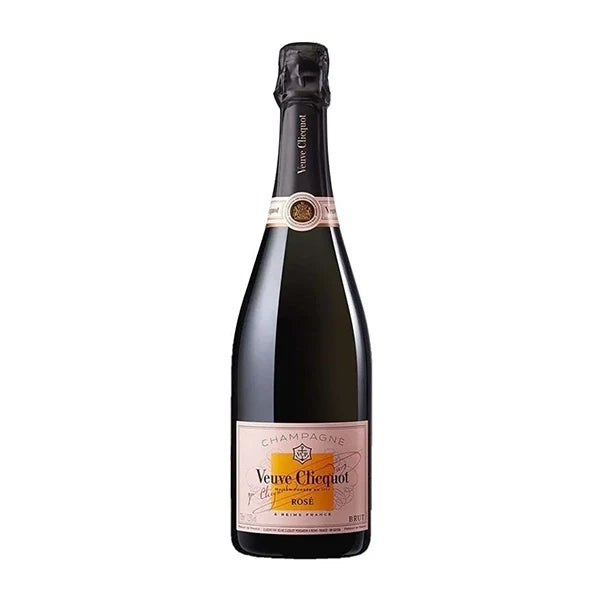
Veuve Clicquot Brut Rose Champagne – 75cl


Veuve Clicquot La Grande Dame 2012 Yayoi Kusama Limited Edition – 75cl

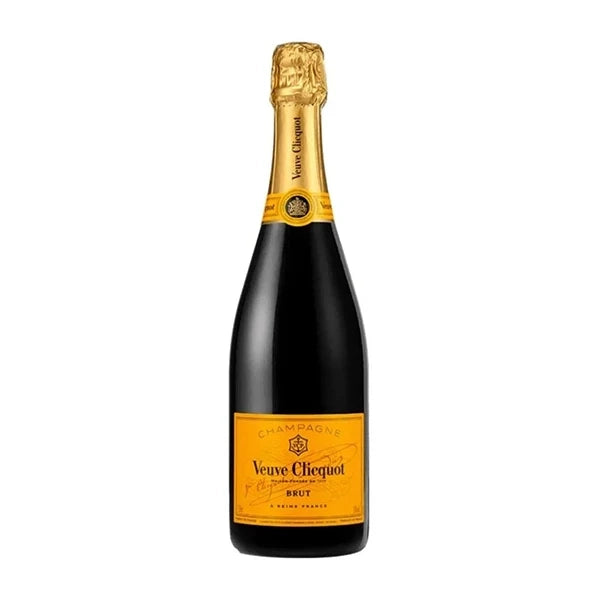
Veuve Clicquot Yellow Label Brut Champagne – 75cl
Veuve Clicquot Champagne
Founded 1772 in Reims, Champagne by Philippe Clicquot-Muiron — over 250 years of continuous heritage. Madame Clicquot (Barbe-Nicole Ponsardin) took over the house in 1805 at age 27 — among the very first women to lead a major French commercial enterprise. Pioneered the riddling table (1816, by cellar master Antoine de Müller), invented blended Rosé Champagne (1818), and the iconic yellow label trademarked 1877. LVMH-owned since 1987. Cellar Master Didier Mariotti since 2020. The signature Yellow Label Brut NV (the iconic flagship — 50-55% Pinot Noir, 15-20% Meunier, 28-33% Chardonnay), the Rosé Champagne (Madame Clicquot's 1818 invention), the Yayoi Kusama Edition (collaboration with the iconic Japanese contemporary artist), and the prestige La Grande Dame cuvée. Buy Veuve Clicquot Champagne online in Singapore with free delivery.
Buy Veuve Clicquot Champagne in Singapore
Veuve Clicquot is one of the most historically significant Champagne houses globally — founded in 1772 in Reims, Champagne, with over 250 years of continuous heritage. The brand is most famously associated with Madame Clicquot (Barbe-Nicole Ponsardin), who took over the Champagne house in 1805 at age 27 after her husband François Clicquot's death — becoming one of the very first women to lead a major French commercial enterprise. The Liquid Collection stocks the Veuve Clicquot range available in Singapore — including the iconic Veuve Clicquot Yellow Label Brut NV (12% ABV, 75cl, the signature flagship that reconciles strength and silkiness in perfect balance with aromatic intensity and freshness, recreated every year through the brand's priceless reserve wines collection — blend of 50-55% Pinot Noir, 15-20% Meunier, 28-33% Chardonnay, ideal as aperitif or with meals), the Veuve Clicquot Rosé Champagne (12.5% ABV, 75cl, the modern continuation of Madame Clicquot's 1818 pioneering invention of blended Rosé Champagne, made from 50-60 different crus, with full-bodied fruity character of intense ripe strawberries and cherries), and the distinctive Yayoi Kusama Veuve Clicquot Edition (the collaboration with the iconic Japanese contemporary artist sending a cheerful, colourful message specifically made for Veuve Clicquot — featuring Kusama's signature polka-dot iconography). LVMH-owned since 1987.
Every bottle ships free across Singapore with no minimum order and standard 3-working-day delivery. Browse the Veuve Clicquot selection above, or explore the wider wine category, the broader Champagne selection, the prestige LVMH Champagne at Dom Pérignon, the LVMH cognac portfolio at Hennessy, the LVMH single malt at Glenmorangie and Ardbeg, our luxury gifts selection, or the prestige Fine & Rare range.
Veuve Clicquot — Key Facts at a Glance
- Brand
- Veuve Clicquot
- Founded
- 1772 by Philippe Clicquot-Muiron, in Reims, Champagne, France
- Madame Clicquot
- Barbe-Nicole Ponsardin (1777-1866), led 1805-1866 — 60-year tenure
- Distinctive Position
- Among the first women to lead a major French commercial enterprise
- Major Innovations
- Riddling table (1816 by Antoine de Müller); blended Rosé Champagne (1818); first commercial vintage Champagne (1810)
- Iconic Yellow Label
- Trademarked 1877 — among the oldest commercial trademarks in the world
- Yellow Label Blend
- Pinot Noir 50-55% + Meunier 15-20% + Chardonnay 28-33%
- House Style
- Strength and silkiness in perfect balance; rich, full-bodied character
- Range
- Yellow Label Brut NV · Rosé NV · Yayoi Kusama Edition · La Grande Dame (prestige cuvée)
- Owner
- Moët Hennessy Louis Vuitton (LVMH) since 1987
- Cellar Master
- Didier Mariotti (since 2020, succeeded Dominique Demarville)
- Reims Location
- Historic capital of the Champagne region; cellars cut into limestone chalk
1772 to 1805 to today — Madame Clicquot's landmark female-leadership Champagne heritage
Veuve Clicquot was founded in 1772 by Philippe Clicquot-Muiron in Reims, the historic capital of the Champagne region of France. The original Maison Clicquot was a wool, banking, and Champagne trading house — typical of the diversified commercial operations common in 18th-century French commerce. The brand's modern identity took shape after Madame Clicquot (Barbe-Nicole Ponsardin) took over the Champagne house in 1805, when her husband François Clicquot died of typhoid fever at age 30. At just 27 years old, the widowed Madame Clicquot decided to take over the family Champagne business — a genuinely audacious decision in early 19th-century French commerce, where women were rarely permitted to lead major commercial enterprises. The "Veuve Clicquot" name (literally "Widow Clicquot" in French) reflects this widowhood heritage that defines the brand's identity.
Across Madame Clicquot's 60-year tenure (1805-1866), the house oversaw multiple genuinely landmark Champagne production innovations: the invention of the riddling table (1816, by her cellar master Antoine de Müller — revolutionary for clarifying Champagne by removing dead yeast cells from the bottle, a technique now used by every Champagne producer globally); the pioneering of blended Rosé Champagne (1818 — first commercialised technique, defining all modern Rosé Champagne globally); the establishment of the modern vintage Champagne tradition (the 1810 vintage was among the earliest commercially-released vintage Champagnes); and the global expansion of the brand into Russia, Eastern Europe, and beyond. Madame Clicquot died in 1866 at age 89. Her landmark female-leadership legacy in spirits and Champagne predates modern figures (Joy Spence at Appleton Estate 1997, Stephanie MacLeod at Dewar's 2006, Annabel Thomas at Nc'nean 2017) by nearly two centuries — making her appointment in 1805 the foundational landmark for the broader female-leadership heritage in spirits and Champagne globally.
Why Veuve Clicquot — riddling table, Rosé Champagne pioneering, iconic yellow label
The 1816 riddling table — Champagne's most important production innovation
The riddling table (table de remuage in French) is a revolutionary device for clarifying Champagne — invented in 1816 at Veuve Clicquot by Madame Clicquot's cellar master Antoine de Müller. The riddling table is genuinely one of the most important Champagne production innovations in history, and is now used by every Champagne producer globally as a fundamental step in the méthode champenoise process. The riddling table addresses a core challenge in Champagne production: after the secondary fermentation that produces Champagne's characteristic carbonation, dead yeast cells (lees) accumulate at the bottom of each bottle. These dead cells must be removed before the Champagne can be sold, but removing them while preserving the carbonation was extremely difficult before 1816. Antoine de Müller's riddling table consists of an inverted-V wooden rack that holds Champagne bottles at progressively steeper angles. Cellar workers (riddlers) periodically rotate (riddle) each bottle by small angles, gradually moving the dead yeast cells from the side of the bottle to the neck. After approximately 6-8 weeks of riddling, the cells settle in the bottle's neck, where they are then frozen and ejected through "disgorgement" — preserving the wine and its carbonation. The 1816 invention transformed Champagne production efficiency and quality globally, and Veuve Clicquot kept the technique secret from competitors for several years, giving the brand a meaningful production advantage in the early 19th-century Champagne industry.
1818 blended Rosé Champagne and the iconic 1877 yellow label
In 1818, under Madame Clicquot's leadership, Veuve Clicquot pioneered blended Rosé Champagne — making the brand the first to commercialise the technique that now defines all modern Rosé Champagne production globally. Before 1818, Rosé Champagnes were produced using the saignée method (briefly soaking red grape skins with the juice to extract pink colour), which produced lighter, less consistent Rosé character. Madame Clicquot pioneered the blended Rosé technique — adding red still wine (typically Pinot Noir) into the Champagne blend to produce a controllable, consistent, and fully-realised Rosé character. The 1818 innovation has defined all modern Rosé Champagne production globally — including Dom Pérignon Rosé, Krug Rosé, Moët & Chandon Rosé, and virtually every other major Rosé Champagne available today. The iconic Veuve Clicquot yellow label was registered as a trademark in 1877, making it one of the oldest commercial trademarks in the world. The brilliant yellow colour reflects the Champagne's bright personality and impeccable winemaking credentials. The yellow label is genuinely an instantly-recognisable visual signature globally — distinguishing Veuve Clicquot from virtually every other Champagne brand at first sight, and making the brand among the most universally-recognised premium Champagne presentations for celebrations and major occasions.
Veuve Clicquot innovation timeline — 250+ years of landmark Champagne moments
Veuve Clicquot's heritage spans over 250 years of continuous Champagne production — encompassing multiple landmark innovations that have defined modern Champagne production globally. The brand's innovation timeline reflects both Madame Clicquot's genuinely landmark commercial leadership (1805-1866) and the brand's continued cultural relevance through modern artist collaborations and prestige releases.
| Year | Landmark Moment | Significance |
|---|---|---|
| 1772 | Maison Clicquot founded by Philippe Clicquot-Muiron in Reims | The brand's original foundation as wool, banking, and Champagne trading house |
| 1805 | Madame Clicquot (Barbe-Nicole Ponsardin) takes over at age 27 | Among the first women to lead a major French commercial enterprise |
| 1810 | First commercial vintage Champagne | Among the earliest vintage Champagnes ever commercially released |
| 1816 | Riddling table invented by cellar master Antoine de Müller | Genuinely one of the most important Champagne production innovations in history |
| 1818 | First blended Rosé Champagne | Madame Clicquot's pioneering technique now defines all modern Rosé Champagne globally |
| 1866 | Madame Clicquot dies at age 89; 60-year tenure ends | End of one of the longest landmark female-leadership tenures in 19th-century French commerce |
| 1877 | Iconic yellow label trademarked | One of the oldest commercial trademarks in the world |
| 1972 | La Grande Dame prestige cuvée first released | Brand's 200th anniversary celebration; named in honour of Madame Clicquot |
| 1987 | Acquired by LVMH (Moët Hennessy Louis Vuitton) | Joins prestigious LVMH Champagne portfolio alongside Dom Pérignon, Moët & Chandon |
| 2020 | Didier Mariotti appointed Cellar Master | Modern leadership succeeding Dominique Demarville |
The 250+ year heritage timeline demonstrates Veuve Clicquot's sustained relevance across French commercial history — from 18th-century trading house origins through Madame Clicquot's landmark 19th-century female-leadership tenure, to modern LVMH integration and contemporary art collaborations. Few Champagne brands carry such genuinely landmark heritage credentials.
The Veuve Clicquot house style — strength and silkiness in perfect balance
Across the range, Veuve Clicquot is defined by its distinctive Champagne house style — built on the brand's exclusive use of Pinot Noir-dominated blending (Pinot Noir typically representing 50-55% of the blend, with Meunier 15-20% and Chardonnay 28-33%), the rich and full-bodied character that has defined the brand since Madame Clicquot's era, and the priceless reserve wines collection that recreates the consistent Yellow Label house style year after year. The signature character combines strength and silkiness held in perfect balance with aromatic intensity and freshness, distinguishing the brand from lighter Chardonnay-dominated Champagnes (like Ruinart Blanc de Blancs). The Veuve Clicquot Yellow Label Brut NV (12% ABV) shows bright personality reflecting the iconic yellow label, with strength and silkiness in perfect balance, aromatic intensity and freshness — the consistent power to please makes it ideal as an aperitif and as the Champagne to enjoy with a meal. The Veuve Clicquot Rosé Champagne (12.5% ABV) shows the brand's distinctive 1818 blending technique — full-bodied and deliciously fruity with intense flavours of juicy ripe strawberries and cherries, fresh attack followed by fruity harmonious sensation, perfectly balanced in the best Veuve Clicquot pink Champagne style combining elegance and flair — Madame Clicquot's ingenious and audacious spirit. The Yayoi Kusama edition combines the underlying Yellow Label or Rosé character with the iconic Japanese contemporary artist's signature polka-dot iconography. Compared to other prestige Champagne benchmarks: Dom Pérignon wears its 1936 prestige cuvée pioneering, vintage-only release approach, and Plénitude system. Veuve Clicquot wears its 1772 founding heritage, Madame Clicquot female-leadership story, riddling table and Rosé invention pioneering, and the iconic yellow label.
The Veuve Clicquot range
The 1818 Rosé Champagne invention — Madame Clicquot's landmark contribution to Champagne
In 1818, Madame Clicquot invented the modern blended Rosé Champagne — making Veuve Clicquot the first house to commercialise the technique that now defines all modern Rosé Champagne production globally. Before 1818, Rosé Champagnes were produced using the saignée method (briefly soaking red grape skins with the juice to extract pink colour), which produced lighter, less consistent Rosé character. Madame Clicquot's blended Rosé technique adds red still wine (typically Pinot Noir) into the Champagne blend to produce a controllable, consistent, and fully-realised Rosé character.
The 1818 innovation has defined all modern Rosé Champagne production globally — including Dom Pérignon Rosé, Krug Rosé, Moët & Chandon Rosé, Bollinger Rosé, Pol Roger Rosé, and virtually every other major Rosé Champagne available today. The technique's wide adoption reflects the practical advantages of blended Rosé over saignée Rosé: more consistent year-to-year character, easier production scaling, and more controllable colour and flavour outcomes. The Veuve Clicquot Rosé Champagne available at The Liquid Collection (75cl, 12.5% ABV) is the modern continuation of Madame Clicquot's 1818 invention — using 50-60 different crus in the modern Rosé blend, based on Yellow Label's traditional blend (50-55% Pinot Noir, 15-20% Meunier, 28-33% Chardonnay) with red still wine added — preserving the strength and silkiness of Veuve Clicquot's house style while adding the distinctive Rosé character of intense ripe strawberries and cherries.
Veuve Clicquot and the female-leadership heritage in Champagne and spirits
Madame Clicquot's appointment as head of Maison Veuve Clicquot in 1805 — at age 27, after her husband's death — represents one of the most genuinely landmark moments in the history of female commercial leadership globally. In early 19th-century France, women were rarely permitted to lead major commercial enterprises, and Madame Clicquot's 60-year tenure (1805-1866) was genuinely audacious for its era. Her landmark female-leadership legacy in spirits and Champagne predates modern figures by nearly two centuries — providing the historical foundation for the modern wave of female master blenders, distillers, and brand leaders that has emerged in spirits over the past few decades.
The female-leadership Champagne and spirits heritage cluster on TLC now spans multiple major brands across centuries: Madame Clicquot at Veuve Clicquot (Champagne, 1805-1866 — the foundational landmark moment); Joy Spence at Appleton Estate (Jamaica rum, since 1997 — the first female master blender in the spirits industry globally); Stephanie MacLeod at Dewar's (Scotch blended whisky, since 2006 — four-time Master Blender of the Year 2019-2022); Rachel Barrie at BenRiach, GlenDronach, and Glenglassaugh (Brown-Forman Scotch); Bessie Williamson at Laphroaig (Scotch single malt, historical 1954-1972); and Annabel Thomas at Nc'nean (Scotch single malt, founder/CEO since 2017). Together, these women represent a meaningful continuity of female-leadership achievement spanning over 200 years of spirits and Champagne history — and Madame Clicquot's 1805 appointment stands as the foundational moment that opened the path for subsequent female-leadership achievements globally.
Veuve Clicquot and the LVMH Champagne portfolio
Veuve Clicquot has been part of Moët Hennessy Louis Vuitton (LVMH) since 1987 — the world's largest luxury group, headquartered in Paris, France. LVMH is led by Bernard Arnault and operates the most comprehensive premium-to-prestige Champagne portfolio globally. The LVMH Champagne portfolio (operated through Moët Hennessy) is the most comprehensive premium-to-prestige Champagne portfolio in the world, including: Dom Pérignon (the prestige cuvée flagship); Moët & Chandon (the world's largest-selling Champagne brand); Veuve Clicquot (the iconic yellow-label Champagne, including the prestige La Grande Dame); Krug (the prestige multi-vintage Champagne, founded 1843, including Grande Cuvée, Vintage, Rosé, Clos du Mesnil, Clos d'Ambonnay); Ruinart (the oldest Champagne house, founded 1729, including Blanc de Blancs, Rosé, Dom Ruinart); and Mercier (the more accessible LVMH Champagne).
The wider LVMH spirits portfolio extends well beyond Champagne to include Hennessy cognac (the world's largest cognac brand), Belvedere vodka, Glenmorangie and Ardbeg Scotch single malts, Volcán de mi Tierra tequila, Eminente rum, and various other premium spirits — making LVMH one of the most comprehensive global premium spirits operators alongside Diageo and Pernod Ricard. The LVMH cluster on TLC now spans 5 pages: Hennessy + Glenmorangie + Ardbeg + Dom Pérignon + Veuve Clicquot — making The Liquid Collection one of the most genuinely comprehensive LVMH spirits and Champagne retailers in Singapore. Future expansion of the LVMH Champagne sub-cluster could include dedicated brand pages for Krug, Moët & Chandon, and Ruinart in future stock acquisitions.
Veuve Clicquot FAQ
What is Veuve Clicquot?
Veuve Clicquot is one of the most historically significant Champagne houses globally — founded in 1772 in Reims, Champagne, by Philippe Clicquot-Muiron, with over 250 years of continuous heritage. The brand is most famously associated with Madame Clicquot (Barbe-Nicole Ponsardin), who took over the Champagne house in 1805 at age 27 after her husband's death. Madame Clicquot ran the house for the next 60 years until her death in 1866, becoming one of the very first women to lead a major French commercial enterprise. Under her leadership, Veuve Clicquot pioneered the riddling table (1816), the first blended Rosé Champagne (1818), and established the iconic yellow label (trademarked 1877). LVMH-owned since 1987.
What does Veuve Clicquot taste like?
Veuve Clicquot has a distinctive Champagne house style — built on Pinot Noir-dominated blending (Pinot Noir 50-55%, Meunier 15-20%, Chardonnay 28-33%), rich and full-bodied character, and the priceless reserve wines collection. The signature character combines strength and silkiness held in perfect balance with aromatic intensity and freshness. The Yellow Label Brut NV (12% ABV) shows bright personality with strength and silkiness in perfect balance. The Rosé Champagne (12.5% ABV) shows full-bodied, deliciously fruity character with intense ripe strawberries and cherries — the modern continuation of Madame Clicquot's 1818 invention.
When was Veuve Clicquot founded?
Veuve Clicquot was founded in 1772 by Philippe Clicquot-Muiron in Reims, the historic capital of the Champagne region of France. The brand's modern identity took shape after Madame Clicquot (Barbe-Nicole Ponsardin) took over the Champagne house in 1805. Madame Clicquot ran the Maison Veuve Clicquot for the next 60 years until her death in 1866 at age 89 — a tenure that made her one of the most genuinely landmark female business leaders in 19th-century France. The brand has been part of LVMH since 1987.
Who was Madame Clicquot?
Madame Clicquot (Barbe-Nicole Ponsardin, 1777-1866) was one of the most genuinely landmark female business leaders in 19th-century France — the woman who transformed Veuve Clicquot from a regional trading house into a global Champagne brand. Born in Reims in 1777, she married François Clicquot in 1798 and took over the Champagne house at age 27 after her husband's death from typhoid fever in 1805. Across her 60-year tenure (1805-1866), Madame Clicquot oversaw the invention of the riddling table (1816), the pioneering of blended Rosé Champagne (1818), and the global expansion of the brand. Her landmark female-leadership legacy predates modern figures (Joy Spence at Appleton 1997, Stephanie MacLeod at Dewar's 2006) by nearly two centuries.
What is the riddling table?
The riddling table (table de remuage) is a revolutionary device for clarifying Champagne — invented in 1816 at Veuve Clicquot by Madame Clicquot's cellar master Antoine de Müller. The riddling table addresses a core challenge in Champagne production: dead yeast cells (lees) accumulate at the bottom of each bottle after secondary fermentation. The riddling table consists of an inverted-V wooden rack that holds Champagne bottles at progressively steeper angles. Cellar workers periodically rotate (riddle) each bottle by small angles, gradually moving the dead yeast cells to the neck for disgorgement. The 1816 invention transformed Champagne production globally and is now used by every Champagne producer.
Who invented Rosé Champagne?
Veuve Clicquot pioneered the modern blended Rosé Champagne in 1818 under Madame Clicquot's leadership — making the brand the first to commercialise the technique that now defines all modern Rosé Champagne production globally. Before 1818, Rosé Champagnes were produced using the saignée method. Madame Clicquot pioneered the blended Rosé technique — adding red still wine (typically Pinot Noir) into the Champagne blend to produce a controllable, consistent, and fully-realised Rosé character. The 1818 innovation has defined all modern Rosé Champagne production globally — including Dom Pérignon Rosé, Krug Rosé, Moët & Chandon Rosé, and virtually every other major Rosé Champagne available today.
What is the Veuve Clicquot Yellow Label?
The Veuve Clicquot Yellow Label Brut NV (Non-Vintage) is the brand's iconic signature flagship Champagne — and one of the most universally-recognised Champagne expressions in the world. The Yellow Label is the consistent house style of Veuve Clicquot, recreated every year through the brand's priceless collection of reserve wines. The blend is dominated by Pinot Noir (50-55%, contributing strength), with Meunier (15-20%, adding fruit-forward freshness) and Chardonnay (28-33%, adding elegance and minerality). The expression manages to reconcile strength and silkiness — held in perfect balance with aromatic intensity and freshness. The iconic yellow label was registered as a trademark in 1877.
What is the Yayoi Kusama Veuve Clicquot collaboration?
The Yayoi Kusama Veuve Clicquot collaboration features custom packaging design by the iconic Japanese contemporary artist Yayoi Kusama (born 1929) — particularly famous for her signature polka-dot iconography and immersive infinity-room installations. The Kusama-Veuve Clicquot collaboration features Kusama's distinctive joyful and colourful aesthetic applied to Veuve Clicquot's iconic Yellow Label and Rosé bottles. The collaboration sits within Veuve Clicquot's broader culturally-engaged limited-edition tradition, alongside Dom Pérignon's contemporaneous Takashi Murakami collaboration (2025) — making both LVMH Champagne brands meaningfully connected to major Japanese contemporary art figures.
Who owns Veuve Clicquot?
Veuve Clicquot has been part of Moët Hennessy Louis Vuitton (LVMH) since 1987 — the world's largest luxury group. The LVMH Champagne portfolio includes Dom Pérignon, Moët & Chandon, Veuve Clicquot, Krug, Ruinart, and Mercier. The wider LVMH spirits portfolio includes Hennessy cognac, Belvedere vodka, Glenmorangie and Ardbeg Scotch single malts. Cellar Master Didier Mariotti has led Veuve Clicquot since 2020.
What is La Grande Dame?
La Grande Dame ("The Great Lady" in French) is Veuve Clicquot's prestige cuvée — a vintage Champagne expression named in honour of Madame Clicquot, first released in 1972 to celebrate the brand's 200th anniversary. La Grande Dame is exclusively vintage Champagne, sourced exclusively from Grand Cru villages, and predominantly Pinot Noir (typically ~90% in modern releases — reflecting Madame Clicquot's preference for Pinot Noir-driven Champagne). Recent vintages have included 2008, 2012, 2015. La Grande Dame Rosé is the prestige Rosé equivalent. Future stock acquisition opportunity at The Liquid Collection.
Is Veuve Clicquot a good gift?
Yes — Veuve Clicquot is one of the most universally meaningful Champagne gift choices globally, and the iconic yellow label is among the most genuinely recognisable Champagne presentations for celebrations and major occasions. The Yellow Label Brut NV is the universal flagship gift bottle. The Rosé Champagne is the considered Rosé gift choice — celebrating Madame Clicquot's 1818 invention. The Yayoi Kusama Edition is the distinctive contemporary-art collaboration gift. The 1772 founding heritage, the Madame Clicquot landmark female-leadership story, the riddling table invention (1816), the Rosé Champagne pioneering (1818), the iconic yellow label (1877 trademark), the major contemporary artist collaborations, and the LVMH ownership pedigree all give Veuve Clicquot unusually rich gift storytelling.
Do you deliver Veuve Clicquot across Singapore?
Yes. Free delivery anywhere in Singapore with no minimum order. Standard lead time is 3 working days.