



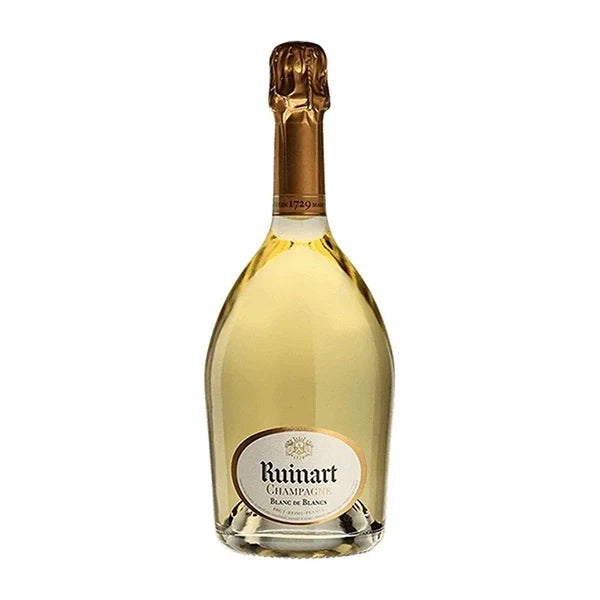
Ruinart Blanc de Blancs Champagne – 75cl


Ruinart Rose Champagne – 75cl
Ruinart Champagne
The oldest Champagne house in the world. Established September 1, 1729 in Reims by Nicolas Ruinart — over 295 years of continuous heritage. Inspired by Nicolas's uncle Dom Thierry Ruinart (1657-1709), Benedictine monk and contemporary of Dom Pérignon. Founded one year after the 1728 Edict of Saint-Germain-en-Laye that authorised sparkling wine bottle transport. Distinguished by Chardonnay-dominated house style and the iconic 100% Chardonnay Blanc de Blancs flagship. The historic Crayères de Ruinart chalk cellars beneath Reims — Roman-era 3rd-4th century AD chalk quarries, UNESCO World Heritage Site since 2015. Predates Moët & Chandon (1743) by 14 years, Veuve Clicquot (1772) by 43 years, and Perrier-Jouët (1811) by 82 years. LVMH-owned since 1988. Cellar Master Frédéric Panaïotis since 2007. The signature Ruinart Blanc de Blancs (100% Chardonnay) and Ruinart Rose Champagne (55% Pinot Noir + 45% Chardonnay). Buy Ruinart Champagne online in Singapore with free delivery.
Buy Ruinart Champagne in Singapore
Ruinart is the oldest Champagne house in the world — established on September 1, 1729 in Reims, Champagne, by Nicolas Ruinart, with over 295 years of continuous heritage. The brand pre-dates all other major Champagne houses: 14 years older than Moët & Chandon (1743), 43 years older than Veuve Clicquot (1772), 82 years older than Perrier-Jouët (1811), and significantly older than Bollinger (1829), Pol Roger (1849), and most other Champagne houses. The Liquid Collection stocks Ruinart in Singapore — including the iconic Ruinart Blanc de Blancs Champagne (75cl, 100% Chardonnay — the brand's signature flagship and the gateway expression of Chardonnay-only Champagne globally, with refined elegance, finesse, light freshness, and signature brightness, complex citrus and stone fruit aromas, biscuit and brioche autolytic character developed through extended lees ageing) and the Ruinart Rose Champagne (75cl, blend of 55% Pinot Noir from the Montagne de Reims and Marne Valley + 45% Chardonnay from the Côte des Blancs and Montagne de Reims, with 20-25% reserve wines from the past two years, 19% of the fruit vinified as red — coral pink colour with fine and persistent lace of bubbles, very fine nose with subtle fresh aromas of cherries and crunchy red fruits, finer fragrances of rose and pomegranate, balanced fruity deliciously fresh palate with great suppleness). LVMH-owned since 1988. Cellar Master Frédéric Panaïotis has led the brand since 2007 — an 18+ year tenure as one of the longest-serving modern Champagne Cellar Masters.
Every bottle ships free across Singapore with no minimum order and standard 3-working-day delivery. Browse the Ruinart selection above, or explore the wider wine category, the broader Champagne selection, the prestige LVMH Champagne at Dom Pérignon, the iconic Veuve Clicquot (Reims-based sister LVMH Champagne), the world's largest-selling Moët & Chandon, the artistically distinctive Perrier-Jouët, the LVMH cognac portfolio at Hennessy, the LVMH single malt at Glenmorangie and Ardbeg, our luxury gifts selection, or the prestige Fine & Rare range.
Ruinart — Key Facts at a Glance
- Brand
- Ruinart
- Founded
- September 1, 1729 by Nicolas Ruinart in Reims, Champagne, France
- Distinctive Position
- The oldest Champagne house in the world (predates Moët, Veuve Clicquot, Perrier-Jouët)
- Heritage Inspiration
- Dom Thierry Ruinart (1657-1709) — Benedictine monk, contemporary of Dom Pérignon
- Founding Context
- One year after the 1728 Edict of Saint-Germain-en-Laye (sparkling wine bottle transport authorisation)
- House Style
- Chardonnay-dominated — elegant, finesse, refined, light, fresh, signature brightness
- Flagship
- Ruinart Blanc de Blancs — 100% Chardonnay
- Crayères Cellars
- Roman-era (3rd-4th century AD) chalk quarries beneath Reims, 38m below ground
- UNESCO Status
- UNESCO World Heritage Site since July 4, 2015 (Champagne Hillsides, Houses and Cellars)
- Range
- Blanc de Blancs · Rose · R de Ruinart Brut · Dom Ruinart Vintage prestige cuvée
- Owner
- LVMH (Moët Hennessy Louis Vuitton) since 1988
- Cellar Master
- Frédéric Panaïotis (since 2007 — 18+ year tenure)
1729 — the world's oldest Champagne house
Ruinart was officially established on September 1, 1729 by Nicolas Ruinart (1697-1769) in Reims, the historic capital of the Champagne region of France — making Ruinart the oldest Champagne house in the world, with over 295 years of continuous heritage. Nicolas Ruinart was originally a cloth and textile merchant in Reims when he founded the brand, transitioning into Champagne wine after the 1728 Edict of Saint-Germain-en-Laye legalised sparkling wine bottle transport. The 1729 founding date precedes Moët & Chandon (1743) by 14 years, Veuve Clicquot (1772) by 43 years, Perrier-Jouët (1811) by 82 years, Bollinger (1829), Pol Roger (1849), and virtually all other major Champagne houses.
The brand was inspired by Nicolas's uncle Dom Thierry Ruinart (1657-1709), a French Benedictine monk and contemporary of the more famous Dom Pierre Pérignon (1638-1715, who served as cellar master at the Abbey of Hautvillers from 1668-1715). While Dom Pérignon focused on the technical wine-making innovations at Hautvillers Abbey, Dom Thierry Ruinart focused on the commercial and cultural opportunity for Champagne in the Parisian and Versailles markets. Dom Thierry shared his commercial vision with his nephew Nicolas, and after Dom Thierry's death in 1709, Nicolas continued to develop the family's wine-making interests until officially establishing Maison Ruinart in 1729 — twenty years after his uncle's death, but explicitly inspired by Dom Thierry's vision. The Dom Ruinart prestige cuvée (first released 1959) is named directly in honour of Dom Thierry Ruinart's foundational vision. The Dom Thierry Ruinart-Dom Pérignon contemporary connection genuinely makes Ruinart the most heritage-rich Champagne brand globally — combining commercial vision (Dom Thierry) with technical innovation (Dom Pérignon) at the foundation of modern Champagne.
Why Ruinart — world's oldest, Chardonnay specialist, Roman-era chalk cellars
Chardonnay-dominated house style and the Blanc de Blancs flagship
Ruinart is genuinely the most Chardonnay-dominated of the major Champagne houses — distinguished by its emphasis on Chardonnay grapes from the Côte des Blancs sub-region (Cramant, Avize, Mesnil-sur-Oger, Chouilly, Le Mesnil-sur-Oger), the most renowned Chardonnay terroir in Champagne. The Chardonnay emphasis gives Ruinart wines a more refined, light, and fresh character distinguishing the brand from richer Pinot Noir-dominated Champagnes. The brand's signature flagship is the Ruinart Blanc de Blancs — 100% Chardonnay, the gateway expression of Chardonnay-only Champagne globally. "Blanc de Blancs" literally means "white from whites" in French — a Champagne made exclusively from white grape varieties (Chardonnay being the only white grape grown in Champagne). The Ruinart Blanc de Blancs shows the brand's signature elegance, finesse, refined light freshness, and bright Chardonnay character with complex citrus and stone fruit aromas, biscuit and brioche autolytic character developed through extended lees ageing. Compared to the Pinot Noir-led Veuve Clicquot Yellow Label (50-55% Pinot Noir) or the balanced three-grape Moët & Chandon Imperial Brut, Ruinart's 100% Chardonnay flagship represents the most Chardonnay-driven major Champagne house in the world. The Liquid Collection stocks the Blanc de Blancs at $139.90 SGD single bottle ($828 SGD 6-bottle case).
The Crayères de Ruinart — Roman-era UNESCO chalk cellars
The brand's most distinctive production asset is the Crayères de Ruinart — the brand's chalk cellars beneath Reims, originally dug in the Roman period (3rd-4th century AD) as chalk quarries, and now used by Ruinart for Champagne ageing. The Crayères extend approximately 38 metres below ground level (8 storeys deep), providing ideal natural conditions for Champagne ageing — constant temperature (approximately 11°C / 52°F year-round), high humidity, and natural protection from light and vibration. The Crayères de Ruinart were inscribed as part of the UNESCO World Heritage Site "Champagne Hillsides, Houses and Cellars" on July 4, 2015 — making them officially recognised as among the most genuinely landmark wine cellars globally. The use of Roman-era chalk quarries for modern Champagne ageing represents one of the most distinctive heritage continuity stories in modern wine — connecting 21st-century Champagne production directly to 3rd-4th century Roman engineering. The Crayères provide ideal conditions that no modern industrial cellar can replicate — natural temperature stability, natural humidity, and the chalk's mineral interaction with the Champagne during extended lees ageing. The Crayères are integral to Ruinart's brand identity, distinguishing the brand from Champagne houses with more modern industrial cellar facilities.
Ruinart heritage timeline — 295+ years of landmark Champagne moments
Ruinart's heritage spans over 295 years of continuous Champagne production — encompassing multiple landmark moments that have defined the brand's role as the world's oldest Champagne house. The brand's heritage timeline reflects French history from the late Bourbon era through the modern luxury Champagne industry.
| Year | Landmark Moment | Significance |
|---|---|---|
| 1657 | Dom Thierry Ruinart born | The Benedictine monk who would inspire the brand's founding |
| 1697 | Nicolas Ruinart born (Dom Thierry's nephew) | The future founder of Maison Ruinart |
| 1709 | Dom Thierry Ruinart dies | His commercial Champagne vision inherited by Nicolas |
| 1728 | Edict of Saint-Germain-en-Laye signed by King Louis XV (May 25) | French royal authorisation for sparkling wine bottle transport |
| 1729 | Maison Ruinart established (September 1) by Nicolas Ruinart in Reims | The world's first commercial Champagne house |
| 1769 | Nicolas Ruinart dies at age 72 | End of the founder era; brand continues under family stewardship |
| 1959 | Dom Ruinart prestige cuvée first released (1959 vintage) | Named in honour of Dom Thierry Ruinart; vintage Champagne with predominantly Chardonnay blend |
| 1988 | LVMH (Moët Hennessy Louis Vuitton) acquires Ruinart | Joins prestigious LVMH Champagne portfolio alongside Dom Pérignon, Moët, Veuve Clicquot |
| 2007 | Frédéric Panaïotis appointed Cellar Master | Modern leadership; 18+ year tenure as one of the longest-serving Cellar Masters |
| 2015 | Crayères de Ruinart inscribed as UNESCO World Heritage Site (July 4) | Roman-era chalk cellars officially recognised as world heritage |
| 2020 | "Second Skin" eco-friendly paper packaging launched | Sustainability initiative replacing traditional gift box packaging |
The 295+ year heritage timeline demonstrates Ruinart's sustained relevance across French history — from late Bourbon era through Napoleonic, modern Republic, and contemporary luxury Champagne eras. Few brands carry such genuinely landmark heritage credentials, and the brand's "world's oldest Champagne house" status combined with the Roman-era UNESCO Crayères cellars makes Ruinart's heritage credentials uniquely distinctive globally.
The Ruinart house style — elegance, finesse, refined Chardonnay brightness
Across the range, Ruinart is defined by its distinctive Chardonnay-dominated Champagne house style — distinguished by its elegance, finesse, refined light freshness, and signature brightness that has defined the brand since Nicolas Ruinart's era. The Chardonnay emphasis gives Ruinart wines a more refined, light, and fresh character distinguishing the brand from richer Pinot Noir-dominated Champagnes. The Ruinart Blanc de Blancs (100% Chardonnay) shows the most concentrated Ruinart character — refined, light, fresh Chardonnay-only Champagne with the brand's signature brightness, complex citrus and stone fruit aromas, biscuit and brioche autolytic character developed through extended lees ageing in the Roman-era Crayères chalk cellars. The Ruinart Rose Champagne (55% Pinot Noir + 45% Chardonnay) shows coral pink colour with fine and persistent lace of bubbles. The nose is very fine, marked with subtle and fresh aromas of cherries and crunchy red fruits, along with finer fragrances of rose and pomegranate. On the palate, this Rose from the House of Ruinart is balanced, fruity and deliciously fresh with great suppleness and freshness — luscious and delicate fruitiness from the 19% of fruit vinified as red. Compared to the other major Champagne house styles at TLC: Dom Pérignon wears its prestige cuvée vintage Champagne approach; Moët & Chandon wears its balanced three-grape Imperial blend; Veuve Clicquot wears its Pinot Noir-dominated richness; Perrier-Jouët wears its Chardonnay-led Belle Époque elegance. Ruinart wears the most concentrated 100% Chardonnay expression in the world's oldest Champagne house.
The Ruinart range
The five-house Champagne comparison at TLC — comprehensive prestige coverage
Ruinart, Moët & Chandon, Veuve Clicquot, Perrier-Jouët, and Dom Pérignon represent five genuinely distinct prestigious Champagne house philosophies — each with its own house style, ownership group, prestige cuvée, and historical heritage. Together, the five brands offer Singapore drinkers comprehensive coverage of the entire prestigious Champagne segment at The Liquid Collection.
| Aspect | Ruinart | Moët & Chandon | Veuve Clicquot | Perrier-Jouët | Dom Pérignon |
|---|---|---|---|---|---|
| Founded | 1729 (oldest) | 1743 | 1772 | 1811 | 1668 / 1936 launch |
| Founder | Nicolas Ruinart | Claude Moët | Philippe Clicquot-Muiron | Pierre Perrier & Adèle Jouët | Dom Pérignon (heritage); Moët (modern) |
| Owner | LVMH (since 1988) | LVMH (since 1971) | LVMH (since 1987) | Pernod Ricard (since 2005) | LVMH (Moët) |
| House Style | Chardonnay specialist; elegant, refined, fresh | Balanced three-grape; bright fruitiness | Pinot Noir-dominated; rich, full-bodied | Chardonnay-dominated; floral, elegant | Vintage-only; complex, brioche, autolytic |
| NV Flagship | Blanc de Blancs (100% Chardonnay) | Imperial Brut | Yellow Label Brut | Grand Brut | (No NV) |
| Prestige Cuvée | Dom Ruinart (1959) | (Dom Pérignon sister brand) | La Grande Dame (1972) | Belle Époque (1969) | Dom Pérignon Vintage (1936 — first ever) |
| City | Reims | Épernay | Reims | Épernay | Épernay |
| Cellar Master | Frédéric Panaïotis (since 2007) | Benoît Gouez (since 2005) | Didier Mariotti (since 2020) | Séverine Frerson (since 2020) | Vincent Chaperon (since 2019) |
| Distinctive Position | The world's oldest Champagne house; Roman-era UNESCO Crayères cellars | The world's largest-selling Champagne | Most landmark female-leadership heritage (Madame Clicquot) | Most artistically distinctive (Art Nouveau) | The first prestige cuvée Champagne ever |
For Singapore drinkers building a complete prestige Champagne cluster, owning expressions from all five brands offers the genuinely most instructive same-category five-house Champagne comparison available — demonstrating how dramatically different production philosophies, ownership pedigrees, regional centres (Reims vs Épernay), and aesthetic heritages produce distinct prestige Champagne styles. The five brands together represent the full breadth of prestigious Champagne options at The Liquid Collection — and TLC's five-page Champagne cluster is now genuinely the most comprehensive Champagne retailer offering in Singapore.
Ruinart and the LVMH Champagne portfolio
Ruinart has been owned by Moët Hennessy Louis Vuitton (LVMH) since 1988 — when the world's largest luxury group acquired Ruinart alongside the broader Moët Hennessy Champagne portfolio consolidation. LVMH operates the most comprehensive premium-to-prestige Champagne portfolio globally, including Dom Pérignon (the prestige cuvée flagship), Moët & Chandon (the world's largest-selling Champagne brand and parent of Dom Pérignon), Veuve Clicquot (the iconic yellow-label Champagne), Krug (the prestige multi-vintage Champagne, founded 1843), Ruinart (the oldest Champagne house, founded 1729), and Mercier (the more accessible LVMH Champagne).
The wider LVMH spirits portfolio extends well beyond Champagne to include Hennessy cognac (the world's largest cognac brand), Belvedere vodka, Glenmorangie and Ardbeg Scotch single malts, Volcán de mi Tierra tequila, Eminente rum, and various other premium spirits — making LVMH one of the most comprehensive global premium spirits operators alongside Diageo and Pernod Ricard. The LVMH cluster on TLC now spans 7 pages: Hennessy + Glenmorangie + Ardbeg + Dom Pérignon + Veuve Clicquot + Moët & Chandon + Ruinart — making The Liquid Collection one of the most genuinely comprehensive LVMH spirits and Champagne retailers in Singapore. Future expansion of the LVMH Champagne sub-cluster could include dedicated brand pages for Krug and Mercier in future stock acquisitions.
Ruinart FAQ
What is Ruinart?
Ruinart is the oldest Champagne house in the world — established on September 1, 1729 in Reims by Nicolas Ruinart, with over 295 years of continuous heritage. The brand pre-dates all other major Champagne houses: 14 years older than Moët & Chandon, 43 years older than Veuve Clicquot, 82 years older than Perrier-Jouët. Inspired by Dom Thierry Ruinart (1657-1709), Benedictine monk and contemporary of Dom Pérignon. Distinguished by Chardonnay-dominated house style and the iconic 100% Chardonnay Blanc de Blancs flagship. LVMH-owned since 1988. Cellar Master Frédéric Panaïotis since 2007.
What does Ruinart taste like?
Ruinart has a distinctive Chardonnay-dominated Champagne house style — distinguished by its elegance, finesse, refined light freshness, and signature brightness. The Ruinart Blanc de Blancs (100% Chardonnay) shows refined, light, fresh Chardonnay-only character with complex citrus and stone fruit aromas, biscuit and brioche autolytic character. The Ruinart Rose Champagne (55% Pinot Noir + 45% Chardonnay, 19% fruit vinified as red) shows coral pink colour, subtle fresh aromas of cherries and crunchy red fruits, finer fragrances of rose and pomegranate; balanced, fruity, deliciously fresh palate.
When was Ruinart founded?
Ruinart was officially established on September 1, 1729 by Nicolas Ruinart in Reims — making Ruinart the oldest Champagne house in the world. Nicolas Ruinart (1697-1769) was originally a cloth and textile merchant in Reims when he founded the brand, transitioning into Champagne wine after the 1728 Edict of Saint-Germain-en-Laye legalised sparkling wine bottle transport. The 1729 founding date precedes Moët & Chandon (1743), Veuve Clicquot (1772), Perrier-Jouët (1811), and virtually all other major Champagne houses.
Where is Ruinart made?
Ruinart is produced in Reims, the historic capital of the Champagne region of France — alongside Veuve Clicquot. The brand's most distinctive production asset is the historic Crayères de Ruinart — Roman-era 3rd-4th century AD chalk quarries beneath Reims, extending approximately 38 metres below ground level. The Crayères provide ideal natural conditions for Champagne ageing — constant temperature, high humidity, natural protection. UNESCO World Heritage Site since July 4, 2015.
Who was Dom Thierry Ruinart?
Dom Thierry Ruinart (1657-1709) was a French Benedictine monk and the inspiration behind Maison Ruinart — Nicolas Ruinart's uncle, who recognised the commercial potential of Champagne wine during his late-17th-century visits to Paris and Versailles. Dom Thierry was a contemporary of Dom Pérignon at Hautvillers Abbey. While Dom Pérignon focused on technical wine-making innovations, Dom Thierry focused on commercial vision. The Dom Ruinart prestige cuvée (1959) is named in his honour.
What is the Ruinart Blanc de Blancs?
The Ruinart Blanc de Blancs is the brand's iconic flagship Champagne — 100% Chardonnay, made exclusively from Chardonnay grapes sourced from Grand Cru and Premier Cru villages in the Côte des Blancs. "Blanc de Blancs" literally means "white from whites" in French. The Ruinart Blanc de Blancs is widely regarded as the gateway expression of Chardonnay-only Champagne globally — distinguishing the brand from Pinot Noir-dominated Champagnes (Veuve Clicquot) or balanced three-grape blends (Moët & Chandon Imperial). $139.90 SGD single bottle ($828 SGD 6-bottle case).
What are the Crayères de Ruinart?
The Crayères de Ruinart are the brand's historic chalk cellars beneath Reims — originally dug in the Roman period (3rd-4th century AD) as chalk quarries, and now used for Champagne ageing. The Crayères extend approximately 38 metres below ground level (8 storeys deep), providing constant temperature (~11°C / 52°F year-round), high humidity, and natural protection from light and vibration. UNESCO World Heritage Site since July 4, 2015.
What is the Edict of Saint-Germain-en-Laye?
The Edict of Saint-Germain-en-Laye is the French royal edict signed by King Louis XV on May 25, 1728 — the regulatory change that first authorised wine to be transported in glass bottles (rather than only in casks). Before 1728, sparkling wine had to be sold and transported in wooden casks, which was impractical for sparkling wine due to carbon dioxide pressure. Maison Ruinart was founded one year later (September 1, 1729) — making Ruinart the first commercial Champagne house to take advantage of the new regulatory framework.
Who owns Ruinart?
Ruinart has been owned by Moët Hennessy Louis Vuitton (LVMH) since 1988. The LVMH Champagne portfolio includes Dom Pérignon, Moët & Chandon, Veuve Clicquot, Ruinart, Krug, and Mercier. The wider LVMH spirits portfolio includes Hennessy cognac, Belvedere vodka, Glenmorangie and Ardbeg Scotch. Cellar Master Frédéric Panaïotis has led Ruinart since 2007.
How does Ruinart compare to other prestige Champagne houses?
Ruinart's 100% Chardonnay Blanc de Blancs flagship distinguishes it from the Pinot Noir-led Veuve Clicquot Yellow Label or the balanced three-grape Moët & Chandon Imperial. Ruinart is the world's oldest Champagne house (1729 — predates all others). The brand's Roman-era UNESCO Crayères chalk cellars and Chardonnay-led house style genuinely distinguish Ruinart from all other major Champagne houses. Together with Dom Pérignon, Moët, Veuve Clicquot, and Perrier-Jouët at TLC, Ruinart provides the comprehensive prestige Champagne cluster.
Is Ruinart a good gift?
Yes — Ruinart is genuinely one of the most prestigious and meaningful Champagne gift choices available. The Ruinart Blanc de Blancs (100% Chardonnay) is the universal flagship gift bottle and the gateway to Chardonnay-dominated Champagne. The Ruinart Rose Champagne is the considered Rose gift choice. The 1729 founding heritage (the world's oldest Champagne house), the Dom Thierry Ruinart Benedictine monk inspiration, the Roman-era UNESCO Crayères chalk cellars, the Chardonnay-led house style, the LVMH ownership pedigree, and the contemporary art partnerships all give Ruinart unusually rich gift storytelling.
Do you deliver Ruinart across Singapore?
Yes. Free delivery anywhere in Singapore with no minimum order. Standard lead time is 3 working days.